Chapter 7.1:
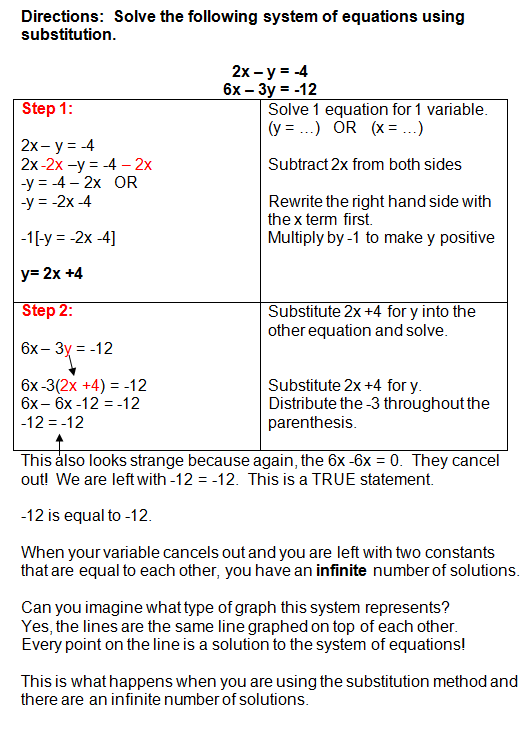
Two equations, such as y = 69 - 6.9x and y = 5.7 + 6.3x, together are called a system of equations. A solution of a system of equations is an ordered pair of numbers that satisfies both equations. A system of two linear equations can have 0, 1, or an infinite number of solutions.
- If the graphs intersect or coincide, the system of equations is said to be consistent. That is, it has at least one ordered pair that satisfies both equations.
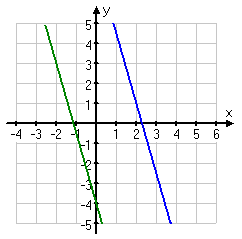
- If the graphs are parallel, the system of equations is said to be inconsistent. There are no ordered pairs that satisfy both equations.
- Consistent equations can be independent or dependent. If a system has exactly one solution, it is independent. If the system has an infinite number of solutions, it is dependent.
Process: 3x + y/3 = 12
9x + y = 36
y = 36 – 9x
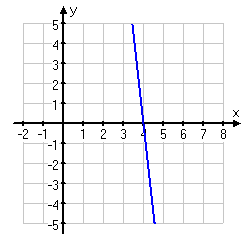
–21x – 6y = 24
Process:
7x + 2y = 16
2y = –7x + 16
y = –( 7/2 )x + 8
–21x – 6y = 24
–21x – 24 = 6y
–( 21/6 )x – 4 = y
–( 7/2 )x – 4 = y
Chapter 7.2
Substitution
The exact solution of a system of equations can be found by suing algebraic methods. One such method is called substitution.
These directions will make a lot more sense when you study the examples below!
Example 1
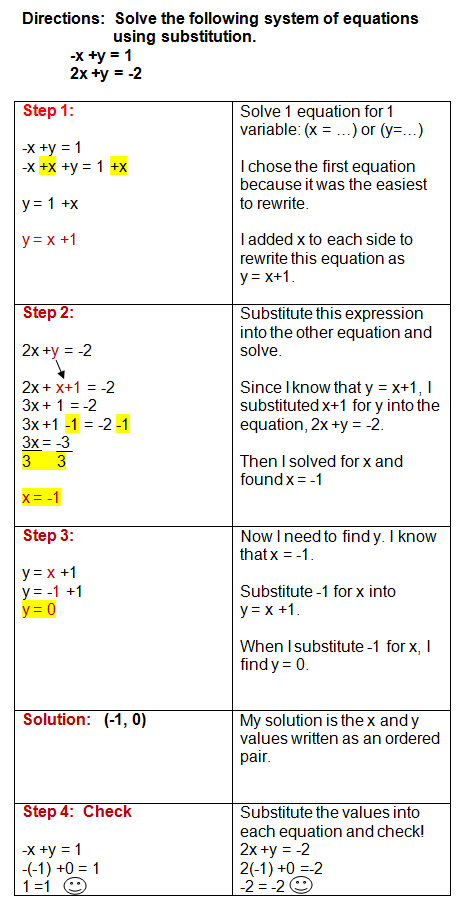
The next example demonstrates a situation where it is easier to solve for x initially.
Example 2
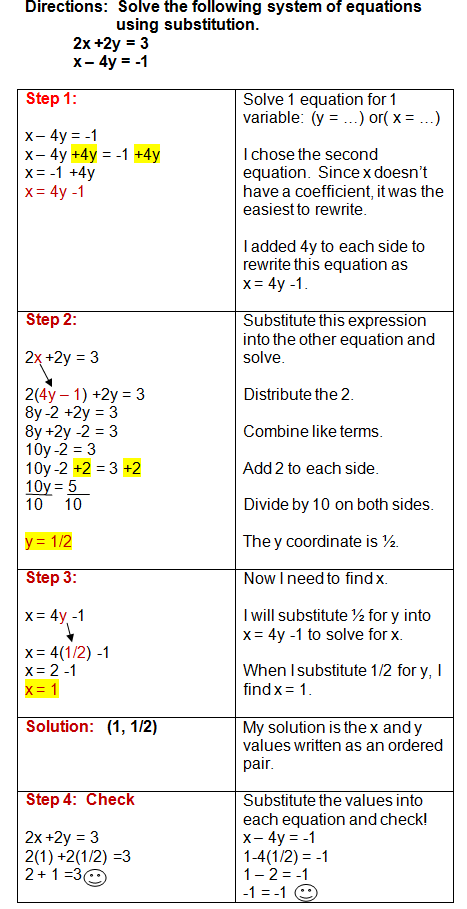
Let's take a look at another example. You'll find this very interesting!
Example 3
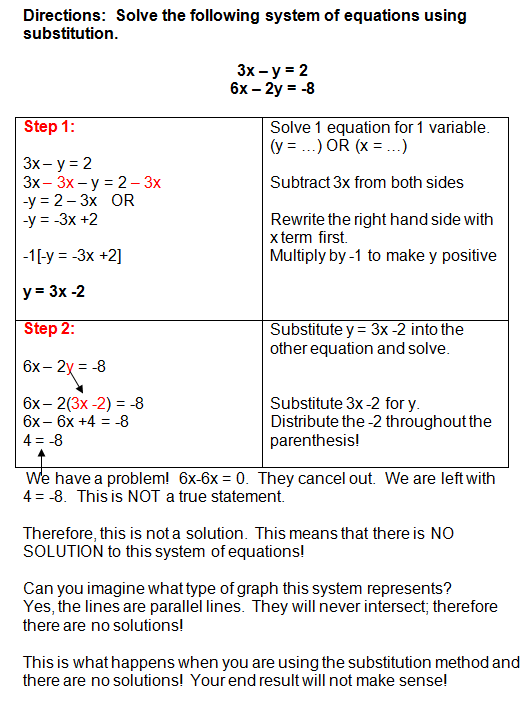
Ok... one more unique example!
Example 4